
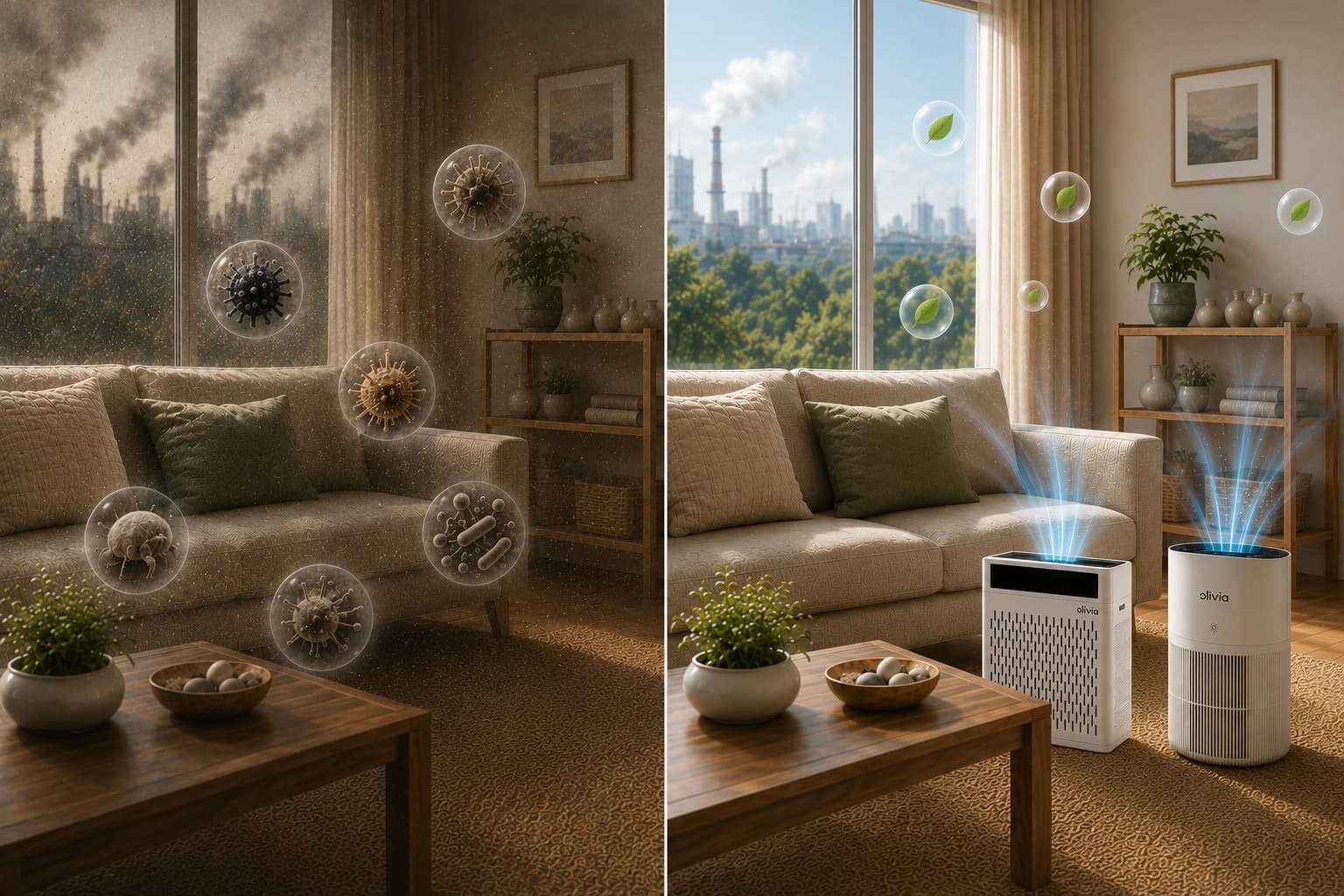
What Affects Indoor Air Quality in India? (And How to Fix It)
What Affects Indoor Air Quality in India? (And How to Fix It)
You close your windows to keep outside pollution away. But the air inside your home can still make you cough, sneeze, or feel tired. This is a common problem in Indian homes.
Indoor air quality is not just about what comes from outside. Many things inside your home also make the air dirty. Understanding what affects it is the first step to fixing it.
What Is Indoor Air Quality?
Indoor air quality means how clean or dirty the air inside your home is. It depends on dust, smoke, gases, and tiny particles floating in the air you breathe every day. Poor indoor air can cause coughing, a blocked nose, itchy eyes, and tiredness, even if you never leave your house. Pollutants can become trapped in closed rooms with little air movement, making indoor air two to five times more polluted than outdoor air.
Why Is Indoor Air Quality Bad in Indian Homes?
Indian homes face a mix of traffic and construction dust entering through doors and windows, seasonal crop-burning smoke, dense flats with little cross-ventilation, candles and mosquito coils, cigarette smoke, and gas cooking without proper exhaust. You may not control outdoor pollution, but many indoor sources can be reduced with better ventilation and filtration.
Does Cooking Affect Indoor Air Pollution?
Yes. Frying, tempering (tadka), and burning gas release smoke, oil particles, and gases such as carbon monoxide. This is especially noticeable in compact homes where the kitchen opens into the living area. Smoke settles on curtains, sofas, and walls and can circulate for hours after cooking.
Do Candles and Mosquito Coils Affect Air Quality?
Candles and mosquito coils release fine smoke particles called PM2.5, which are small enough to enter the lungs. Coils are a particular concern because they may burn for hours overnight in a closed bedroom, causing some people to wake with a heavy head or blocked nose.
How Does Humidity and the Monsoon Affect Indoor Air Quality?
High monsoon humidity creates ideal conditions for mould, fungus, and dust mites on walls, curtains, mattresses, and near bathrooms or windows. These allergens can trigger a blocked nose or other symptoms that are often mistaken for a seasonal cold.
Does Using an Air Conditioner Affect Indoor Air Quality?
Most split ACs cool the air but do not remove smoke, gases, or fine particles. Their basic filters protect internal parts from large dust. In a room sealed for hours, pollutants can keep recirculating even though the room feels cool.
How Does Outdoor Pollution Get Inside Your Home?
Outdoor pollution enters through gaps around frames and vents and whenever doors open. Shoes and clothes also carry road dust indoors. The effect is stronger near busy roads and during winter smog and crop-burning season.
How Can You Improve Indoor Air Quality at Home?
- Ventilate when outdoor air quality is safe and use a kitchen exhaust while cooking.
- Clean floors, curtains, fans, AC filters, and other dust-trapping surfaces regularly.
- Control dampness and humidity, especially during the monsoon.
- Avoid smoking, mosquito coils, and excessive incense in closed rooms.
- Use a correctly sized air purifier with pre-filter, H13 HEPA, and activated-carbon filtration.
Which EnviroTech purifier fits your space?
- Olivia 300: for areas up to 300 sq. ft., including bedrooms and pooja rooms.
- Olivia 700: for larger, open spaces up to 700 sq. ft., such as living rooms and kitchen-facing areas.
- Aeroroz: a non-electric pre-filter and HEPA layer made for split-AC rooms.
Frequently Asked Questions
What are the signs of poor indoor air quality?
Frequent sneezing, a blocked or runny nose, dry cough, itchy eyes, headaches, and unusual tiredness at home can be signs. If symptoms improve when you leave the house, indoor air may be contributing.
Do indoor plants really improve air quality?
Plants can absorb small amounts of certain gases, but they cannot meaningfully handle dust, smoke, or PM2.5. They are a pleasant addition, not a replacement for ventilation and filtration.
Can indoor air quality affect sleep?
Yes. Stuffy, dusty, or humid air can cause a blocked nose, dry throat, and restlessness at night. Keeping the bedroom ventilated, dry, and dust-free can improve comfort.
Final Thoughts
Poor indoor air quality in India comes from many small daily sources: cooking, candles and coils, humidity, closed AC rooms, and outside pollution creeping in. With simple habits and the right filtration, you can noticeably improve the air at home every day.